Tuesday, 16 February 2010

On to more Spiritual matters...


No-one would deny that Christianity has contributed a huge amount to musical culture of the world. Afterall, written music has its origins there and hymns have made up most of the backbone of modern music. Still, I personally believe that the negro spiritual has been the best expression of christianity through music. Maybe its the simple unpretentiousness of them or their association with slavery - thus lending a certain authenticity to the messages and morals - or maybe, I dunno, I just don't like white people's religious music. Regardless, they make up one of the greatest repetoires of folk songs in history and are perhaps more important than any other genre of the 18th and 19th century.

Actually, I'm going to start this post with a song that was not originally a negro spiritual, or even an American song, but which was later inaliably identified with the genre. That song is, of course, "Amazing Grace".

Now if you're one of those genuinely strange people who doesn't know this song, here's a recording by Judy Collins from the early 70's. Generally, I don't like Judy Collins, because she represents a horribly, horribly polished and fake branch of so-called "folk music", but her recording of this, backed by a choir, is pretty perfect:


"Amazing Grace" is one of the oldest songs I'll be dealing with on this blog,it was published in 1779 by ex-slave trader John Newton. This is significant - there were absolutely shiteloads of hymns written in the 17th and 18th century and if we were simply dealing with Christian hymns that influenced negro spirituals I could come up with any number by the likes of Isaac Watts. What makes "Amazing Grace" significant is that it was written by an ex-slave trade trader in (allegedly) a fit of religious and moral guilt over his profession and the song became something of an anthem for the whole abolitionist movement and later for enslaved African-Americans.


The symbol used by the Quakers and other abolitionists in Britain in the 18th century - "Am I not a man and a brother?"

Ironically, this most theistically uplifting of musical genres grew out of cultural opression and repression - when African slaves were brought to America, all elements of their African culture and heritage was obliterated; they were all brought under the arm of Christianity and had any attempts at breaking into African songs or rituals forcefully beaten out of them. When sitting in church, benches would be pushed close together to prevent the slaves from getting up and dancing.

To quote negrospirituals.com:

Rural slaves used to stay after the regular worship services, in churches or in plantation “praise houses”, for singing and dancing. But, slaveholders did not allow dancing and playing drums, as usual in Africa. They also had meetings at secret places (“camp meetings”, “bush meetings”), because they needed to meet one another and share their joys, pains and hopes. In rural meetings, thousands slaves were gathered and listened to itinerant preachers, and sang spirituals, for hours. In the late 1700s, they sang the precursors of spirituals, which were called “corn ditties”.

However, the very basis of Christianity condemns slavery as a sin and it is this fact that eventually made Christianity the enemy of slavery and a tool for its abolition. Trying to provide a timeline for negro spirituals is practically impossible, since, even compared to white folk songs, documentation of the songs is practically non-existant. However, there were a few books published in the mid 19th century that were collections of negro slave songs, often including spirituals, the first and most significant being "Slave Songs Of The United States" in 1867.


If you want to actually read the book, here's a full scan of it:

http://docsouth.unc.edu/church/allen/allen.html

Not a lot of the songs documented are that well known today, but there are a few that are pretty famous. The most famous is probably "Michael, Row The Boat Ashore". It was big during the American 1960's folk revival and, as such, here's a version by Pete Seeger from 1963:


Pete can get on my tits sometimes with his often patronising attitude, but this is pretty cool. Another well known song from the book is "Nobody Knows the Trouble I Seen", sung here by legendary "voice of God" Paul Robeson:


One of the most popular and lasting negro spirituals is "Go Down, Moses", also known as "Let My People Go". Unlike a lot of spirituals, the song is not jubilant and uplifting, but sombre and ominous - the song's relevance has no doubt been emphasised due to the obvious parallels made between the plight of the Israelites and African-American slaves. I mean, it is one of the few slave songs that actually contains the phrase "Let my people go" and so has been put forward as one of the great songs of defiance and determination. The song was first published in 1872 by the Fisk Jubilee Singers, the premiere black vocal group of the era, but some sources have dated the song as having been sung as early as 1853. One of the best versions of the song is from Preston Sturges' 1941 existentialist screwball comedy, "Sullivan's Travels":


Probably the most famous negro spiritual is "Swing Low, Sweet Chariot". Interestingly, the song had an official author, Wallis Willis, a freedman (newly emancipated slave) who composed the song sometime before 1862. Whether he based it on an earlier song he had heard or actually thought it up himself doesn't really matter, though - the song became basically the anthem for African-Americans and arguably remains so until this day, although I'd like to suggest it has more universal status. It has been suggested that the lyrics to the song referenced the "underground railroad", the secret means for slaves to escape to the freed states. It was popularised by the Fisk Jubilee Singers starting in the 1870's and took from there. If, somehow, you haven't actually heard this song, you're probably sectioned. But still, here's a version by vocalist(and clearly a massive Paul Robeson fan) Kevin Maynor. Trying to find decent versions of this song is hard, bytheway, because almost all the versions I see are either "clever reinterpretations" (shite) or sung by overdramatic "soulful" singers (really shite):


After the abolition of slavery, the most famous singers of negro spirituals were the Fisk Jubilee Singers, a group of African-American students from Fisk University who formed in 1871 as something of reaction against the blackface minstrel shows who claimed to bring the "authentic" sound of the freed black slaves to the stage.


The Fisk Singers were an acapella vocal group whose dignified and, admittedly, middle-class renditions of negro songs (and a few Stephen Foster songs) provoked both praise and criticism across America and Europe. Probably for the same reason in both cases - they didn't confirmed to the stereotyped image of blacks that had been instilled in people's minds. They still exist today as a group, albeit (shockingly) with none of the original members; it is something of a tradition in Fisk University. The original Fisk singers made recordings as early as the turn of the century, but they often sound very old and creaky today. A lot of them can be found public domain on the internet, but here's a very good recording made in 1926 of "Keep A' Inchin' Along":


With the birth of various new recording markets, spirituals became widely spread throughout popular culture. Even genres like the supposedly Satanic medium of the blues and the supposedly white-washed country music recorded a lot of negro spirituals.

Artists like Blind Willie Johnson and the Reverend Gary Davis who were usually (and inaccurately) labelled as country blues artists had repetoire composed almost entirely of religious material, albeit played with a bluesy, raggy guitar accompaniment. Here's Reverend Gary Davis playing "Children of Zion" and looking badass on Pete Seeger's Rainbow Quest in the mid 1960's:


And take this beautiful version of "All God's Chillun Got Wings" by cowboy vocal group, the Sons Of The Pioneers - a great defence against the percieved image of country music as white washed or racist:


In the 1940's, Thomas A. Dorsey combined the negro spiritual with jazz, R&B and pop influences and created gospel music. Gospel music is often thought of as interchangable with the negro spiritual, but it really is a very different kind of music - take a listen to this recording of the Golden Gate Quartet, one of the most popular gospel groups of the 30',s 40's and 50's singing the negro spiritual, "Joshua Fit The Battle" in the gospel style:


Of course, in the 20th century, negro spirituals had their biggest revival during the civil rights movements, but that's really an issue for another time....

Twang goose, muds!

Monday, 15 February 2010

American Artist No. 3: Stephen Foster


Although I have to admit this site is getting known for insanely OTT statements like this, I'm going to say it anyway:

Stephen Foster was, and is, the most influential and important American songwriter in American history.

And this actually more an official consensus, rather than any personal hyperbole - everyone on the planet knows his songs. If you don't, then you're probably living in a crater in the middle of the Atlantic with your ears fused shut. Stephen Foster's melodies are familiar across the world, even if he himself is not known as the author.

Take this version of "Camptown Races", by the 2nd South Carolina String Band (a band who make some terrific covers of his songs) and tell me that you don't know this:


Stephen Foster was born in Pittsburgh, Pennsylvania in 1826, of Irish descent, had only a brief education, was influenced by minstrels songs, parlor songs, German classical, negro songs and in the 19th century he set out to do something utterly batshit crazy - write songs for a living.

It's hard to imagine in these days of commercial music, but in the early half of the 19th century it was not considered a viable profession to be an official songwriter. If you wrote songs, it was because you were a performer and you charge money for your performances, not the songs. And of course, the songs were not worth anything - they were merely ditties, not at all worthy of esteem or social value like classical compositions. And, unfortunately for Steve, that's pretty much how it was for him, as a man out of his time - his songs were plagiarised, since there was no concept of copyright for songs in those days and since he wasn't a performer, he died penniless and impoverished at the age of 37.

What he left behind was, to that point, the most sophisticated, unique, memorable and oft-imitated body of songs in America. His work ranged from blackface minstrel songs, to parlour songs, to love ballads, to anti-slavery laments and whatever else he felt like. The most significant innovation was probably his ability to take the previously low form of music, the minstrel or "ethiopian" song and elevate it to a new status - he attempted to, in his own words, "build up taste...among refined people by making words suitable to their taste, instead of the trashy and really offensive words which belong to some songs of that order."

One of his first big hits, published on February 25th, 1848 was "Oh! Susanna". One of the most perfect songs in the history of the world, like, ever, it was ostensibly a minstrel song, sung from the point of view of a black man, using the, *sigh*, dialect that was so popular at the time. The lyrics are partly nonsense:

I came from Alabama wid my banjo on my knee,
I'm g'wan to Louisiana, my true love for to see
It raind all night the day I left, the weather it was dry
The sun so hot I froze to death; Susanna, don't you cry.


But they have a genuine anthemic, emotional backbone to them. The song did contain a verse that is more than a tad inflammatory in today's eyes:

I jump'd aboard the telegraph and trabbled down de ribber,
De lectrick fluid magnified, and kill'd five hundred Nigga.
De bulgine bust and de hoss ran off, I really thought I'd die;
I shut my eyes to hold my bref -- Susanna don't you cry


Accusing Stephen Foster of racism is pretty much pointless - in 1848, even "Uncle Tom's Cabin" hadn't been published yet; considering black people even human was a radical notion to some people, so to empathise and try to emulate them like Stephen Foster did probably made him quite liberal for the day. So to try and condemn him for using dated terms like "nigger" or "darkie" over 150 years ago is ridiculous. On the other hand, I do think it does undermine the emotional impact of the song for it to performed nowadays using those lyrics.

This version by the 2nd South Carolina String band is clever - it basically changes a single letter to make the word "chigger" instead, which is basically a bed-bug. It doesn't matter since its essentially nonsense, but it fits seamlessly. This version is beyond perfect in every measure:


He wrote many other minstrel songs like "Ring De Banjo", "Nelly Bly" and "Uncle Ned", but never topped "Oh! Susanna" in this area. He did also write parlor songs for the more middle-class market, like "I Dream of Jeannie With The Light Brown Hair" and "Hard Times Come Again No More" which weren't radically different from his minstrel songs beyond the fact that they weren't written in a "dialect". Here's a recording of the latter song (written in 1854) by a certain Bob Dylan fellow from 1993. Although Bob's voice was at an all time low at this point, he does actually sing the song properly, presumably because it wasn't one of his own songs:


Steve's songs were incdrebily popular with minstrel performers like Dan Emmett and E.P. Christy, but they weren't so keen on giving him the credit for the. Likewise, publishers would often publish his songs without credit. Since there was no legal defence for songwriters in those times, he basically got royally screwed over throughout his whole career.

Another interesting thing to note about Stephen Foster is that, although he wrote a lot of songs about the Southern states and was most associated with them, he only visited the South once, on a steamboat trip on his honeymoon.

Perhaps Foster's magnum opus was written in 1863, "Old Black Joe". The song combined all his previous work in the fields of minstrel songs, parlor songs and spiritual ballads. The song is a tale that was popular in the late half of the 19th century, that of the aged slave (or ex-slave) living his last days, lamenting for his long gone friends and family and his desire to join them in the after life. It's a theme that would explored again in songs like "Little Old Log Cabin In The Lane", but Steve's song is the most poignant, with the haunting chorus refrain of:

I'm coming, I'm coming, for my head is bending low
I hear their gentle voices calling Old Black Joe.


Although sung from the point of view of a black man, it's not written in a dialect, which was pretty rare for the time and paint a sympathetic but also dignified portrayal, with little of the patronisation that existed in other minstrel songs. Here's a recording from the 1930's by Cowboy group, The Sons of the Pioneers:


Still, like I said, Steve wasn't making a lot of money and on January 13th 1864 he died in a Hotel in New York, with only 35 cents in his pocket. However, his songs lasted and became renowned throughout the world. They were routinely taught in American schools, although this abated somewhat in the 1960's after the Civil Rights movement claimed that many of Stephen Fosters songs were racially insensitive. Kind of ironic, since Stephen Foster came to fame in the first place through his attempts to be sensitive to African-American culture.

Today, another re-evalutation has been going on which argues against the claim of racially insensitivity, but it's unlikely to be a debate which'll close any time soon. Partly it's probably due to the sheer influence of his songs - no-one would give a rat's ass about Will Hayes, or Henry Clay Work's racially themed material from the same era, but Steve's song are so well known that they have come to represent America's musical culture more than any other and thus attract far more debate and controversy than any other songwriter of the time.

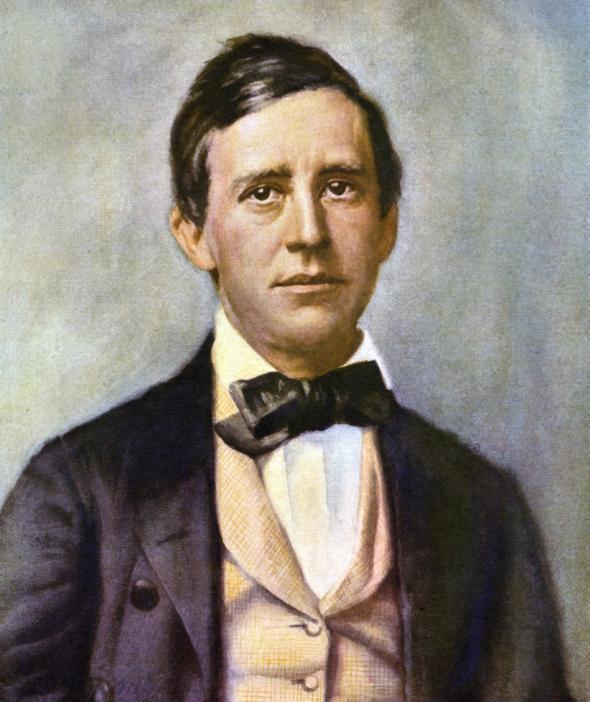
The main point about Stephen Foster is the songs themselves and they are truly beautiful - he was the first songwriter who actually saw the value in an original melody, rather than one merely stolen from a traditional song and he saw that the simple medium of the "song" could be just as relevant as any classical composition. He was a humble, shy figure from all accounts (just look at that photo at the top) and would probably never have believed his songs would cause the kerfuffle they have done over the century.

So, until I hear those gentle voices calling...


Monument to Stephen Foster, Pittsburgh, Pennsylvania

Thursday, 4 February 2010

American Song # 3: Turkey in the Straw/Old Zip Coon


There is no song in American history which represents America more than "Turkey in the Straw" and there is no song which America is more ashamed of.

Everyone knows the tune "Turkey in the Straw", but in case you need reminding, here's some random YouTube fella playing it on the fiddle:


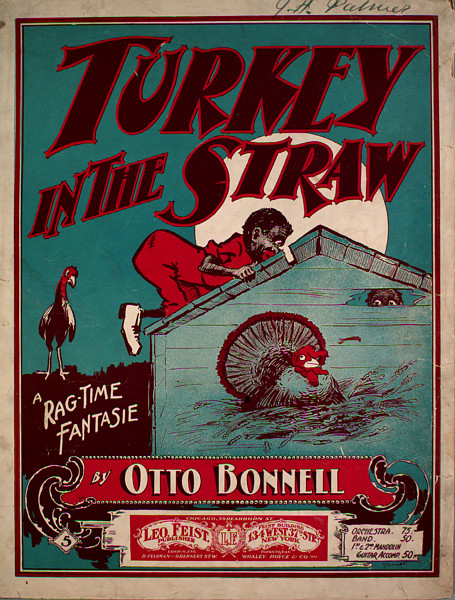
It's pretty much the perfect melody and those few notes say more about America than the entire wanking country music scene for the last 40 years. The legendary tune has existed since at least the 18th century and has its roots in irish music, but when it came over to America it became a hit on the newly arisen blackface ciruit. To cash in on the success of the ur-blackface number, "Jump Jim Crow", around 1830 the melody was first named and published as "Old Zip Coon".


I do have to say that, compared to later negro parodies, Zip Coon is actually a pretty suave-looking guy.

There is a tendency with such a well known song for people to try and "reinterpret" it when they play, but the best straightforward version of the song I've heard is by the 2nd South Carolina String Band from, oh yes, 1997. The 2nd South Carolina String Band specialise in accurate recreations of Civil War era music and their version of "Zip Coon" is pretty much as good as it gets:


The song was originally written with the chorus: "O Zip a duden duden duden zip a duden day!" Bob Dylan, eat yer heart out!

It was one of the most popular minstrel songs of its day along with the likes of "Dixie" and "Oh Susanna". In 1861, the song was published again, with new lyrics by Dan Bryant and was first called "Turkey in the Straw". This is the title most associated with it today.

Both "Old Zip Coon" and "Turkey in the Straw" are nonsense songs - there is no working class message, no racial or social message, no romance - just complete meaningless nonsense. The lyrics have been altered throughout the ages, but here's a few examples:

Did you ever go fishin'
On a warm summer day
When all the fish
Were swimmin' in the bay
With their hands in their pockets
And their pockets in their pants
Did you ever see a fishie
Do the Hootchy-Kootchy Dance?


OR

Well, if frogs had wings and snakes had hair,
And automobiles went flyin' thro' the air,
Well, if watermelons grew on a huckleberry vine,
We'd still have winter in the summer time.


OR

O it's old Suky blue skin, she is in lub wid me,
I went the udder arter noon to take a dish ob tea;
What do you tink now, Suky hab for supper,
Why chicken foot an possum heel, widout any butter.


OR

Sings posom up a gum tree an cooney in a holler,
posom up a gum tree, cooney on a stump,
posum up a gum tree, cooney on a stump,
Den over dubble trubble, Zip Coon will jump.


Some of the strangest lyrics ever written were written in the 19th century - Bob Dylan's "surreal" lyrics on the likes of "Blonde on Blonde" ain't got shit on them. A fact which Bob himself has acknowledged.

The song has entered into the public consciousness in many ways. One of the most well known of course is the classic Disney cartoon Steamboat Willie from 1928, the first Disney cartoon to use synchronised sound, in which Mickey plays the song using the organs of various animals:


Legendary stuff. The song was first recorded in the 1890's (possibly 1891!) by Billy Golden. Here's a link to public domain upload from the Internet Archive:

http://www.archive.org/details/TurkeyInTheStrawByBillyGolden1890s

Shockingly, the sound quality isn't great, although it's surprisingly good for the 19th century. Here its played in vaudeville style on the piano with Billy going mental, shrieking and laughing like a nutter. Billy Golden was one of the first great stars of the vaudeville circuit and recorded numerous popular songs.

"Turkey in the Straw" was most associated with blackface until the hillbilly scene took off; it then became most associated with that other most ridiculed American minority, the southerner and the song became a by-word for rural life and hickishness. Take a look at this music video fron 1942, by the Schnickelfritz Band:


I'm going to make a bold statement here, because I'm drunk: "Turkey in the Straw" is the GREATEST MELODY IN HUMAN HISTORY. You may think I'm crazy, but just keep listening to it. It's simple and yet its complex and its SOOOOOOOOOOOOOO catchy and memorable. Yet unlike many other folk songs, you won't find this played to an American flag, by a brass band, or sung at a political rally. The most you'll ever hear is an Ice Cream truck

Its the song that America likes to push into a corner - its a point of guilt and embarrassment, representing everything that they like to forget, like blackface minstrelry and hillbillies. It is not considered an artistic song, or an important song. It's considered lightweight and childish. But it's this shameless pretentiousness that highlights its genius. They may play "Glory, Glory Hallelujah", "Star Spangled Banner", "God Bless America", but it's "Turkey in the Straw" and "Old Zip Coon" and THAT melody that really embodies America and says everything you need to know and feel.

It is perfection. It should be treasured.

So, everyone together:

De de, de-de de, de de deh deh, deh deh deh, de, deh...

Wednesday, 3 February 2010

American Artist No. 2: Blind Blake


You know, there's a very typical image of the bluesman in most people's heads. That of the haggered old guy, dressed in dusty dungerees, sitting on a porch swing, banging out some amelodic 3 chord drone and wailing in an off-key voice about the devil, death and his "baby" her various weelings and dealings.

Yeah? Well, Blind Blake is NOTHING like that. Blind Blake represents the other side of the bluesman spectrum - dressed up sharp, singing often-witty lyrics over the maybe the most stunning guitar playing ever put on record. Look, he's fecking smiling in that photo!

Nothing is really known about Blind Blake. The photo above is the only one ever discovered. Some people have suggested he came from the Gullah (or Geechie) communities of South Carolina, since on one of his records he starts using the dialect, but this has never been confirmed. Even his real name was never sure - on another record he actually states his name is "Blind Arthur Blake", but some have suggested his last name was actually "Phelps" and that "Blake" was a nickname denoting a "hard-ass". He was probably born circa 1893 and is thought to have died sometime in the 1930's, although this has never been proven, either. He was, along with Blind Lemon Jefferson, the best-selling blues artist of the 1920's and, unlike Blind Lemon Jefferson, it's not hard to see why - his records are catchy, witty, cool and jaw-droppingly complex.

Blake played blues, but he equally often played ragtime, pop songs, jazz and even a British music hall number (sort of). He is often considered the Father of Ragtime Guitar - he pioneered an incredibly complex method of fingerpicking which is maybe, to this day, the most innovative and complex ever recorded outside of the most advanced flamenco or classical guitarists and while many people (including myself) have attempted to imitate it, none have ever succeeded. At the time, adverts referred to it as his "piano-sound guitar" and that's basically what it is. Take this recording, "Skeedle Loo Doo Blues" from 1926, as a quintessential example of his ragtime style - the name is probably just for marketing purposes, as the song is most certainly ragtime:


That's one guy with one guitar and yet somehow he manages to play bass, rhythm and lead all at the same time. Perhaps the thing that makes Blake so amazing is his bass lines - whereas even other blues fingers just use an alternating bass with their thumbs (bum-bum, bum-bum, one two, one two, you get the idea) Blake seems to actually create a whole seperate melody with his thumb, while engaging in stunning improvisational playing with his forefingers.

His first record release was "West Coast Blues" backed with "Early Morning Blues" in1926. "West Coast Blues" is another ragtime piece, while "Early Morning Blues" is a genuine blues song. It begins the long line of casually misogynistic songs in which he cheerfully extols the joy of shooting your woman:


The record was a hit and things just kept flowing for him. One thing I'd like to point out about Blake was that he was not really a "country blues" artist, but much more of an urban musician compared to the likes of Blind Lemon Jefferson or Blind Willie McTell.. As such, there are no folk songs in his repetoire and he has a much more heavy jazz influence. On his 1928 record, "Southbound Rag", he is joined by jazz clarinetist (and Louis Armstrong regular), Johnny Dodds:


Maybe his biggest hit, and most well known song, is "Diddie Wah Diddie" from 1928. This is his blues-pop masterpiece - it's a blues in structure, but the song itself is so catchy, bouncy, fun and yet intricate and filled with some of his most jaw-dropping instrumental passages that you could hardly imagine the likes of Robert Johnson covering it:


There's so much I could post for Blind Blake but it would be overwhelming - a really good article on him can be found here: http://www.gracyk.com/blake1.shtml

The main thing about Blind Blake - and the main reason he's not so well known today, except by guitarists - is that he never, EVER fits the patronising bluesman stereotype that was formulated during the 1960's. You can't put him up a symbol of how hard black people had it in the 1920's and how they express the suffering of the negro people through song. Blind Blake was not about suffering or misery. He was about the fun times, the jazz times, he was the spirit of the Roaring Twenties. He came, he made a lot of records, he sold a lot of records and then dissappeared leaving a legacy which those people who really appreciate good music and incredible guitar-playing have treasured and which those pretentious twats who only want their bluesmen to be simplistic, god-fearing, miserablist dumb-asses in order to appease their own elitist insecurites have ignored.

Blind Blake was the man. To finish, here's me playing one of his classic ragtime-pop hits, "That'll Never Happen No More":


Shang goose, cruds!

Monday, 1 February 2010

I am a billie and I live in the hills - Hillbilly Music


Around the same time in 1920 that "Crazy Blues" revealed a market for "race records" another market was realised - that of "hillbilly records", or "old-timey" music made by and made for rural white southern audiences. So, string bands, fiddlers, guitarists, banjoists and more were recorded by the bucketfull in the Southern states, playing music which they had been playing for a hundred years, but which they suddenly were able to make money from. The songs were usually traditional songs and ranged from well known standards like "Turkey in the Straw", to more obscure songs like "Mole in the Ground" and even branching out into pop songs and blues songs. Still, this was first and foremost, "folk music".

The first hillbilly record is a bit controversial - a fiddler named Don Richardson recorded "Old Zip Coon" in 1916 and some have argued the point for this being the first hillbilly record - it could well be, but I'd discount it for a number of reasons. Firstly, the record is so badly preserved that its unlistenable. Secondly, no information is known about Don Richardson, whether he was even from the south or not. Thirdly, this was released before the actual concept of the hillbilly record had been created and there were plenty of other people in vaudeville playing old-timey songs, albeit not in a traditional style. Basically, its too complicated and I will discount it for now.

So, among most scholars, the two musicians slated to have kicked off the Hillbilly record industry are Eck Robertson and Fiddlin' John Carson. Eck Robertson was born in 1887, the son of a confederate soldier; his father and grandfather were also fiddlers. Honing his skills in medicine shows across the US, his recording of "Sallie Gooden" was released on the 1st September 1922 and was not a commercial success. It is, however, one of the most amazing pieces of fiddling ever recorded. The very poor quality of the record somewhat hinders this, but you can still get the sheer virtuosity shining through:


I must note, there are better sounding copies than the YouTube version presented here. Next up was Fiddlin' John Carson. Born in 1868, he was one of the oldest hillbilly musicians to record. He was already proclaimed champion fiddler of Georgia by the time he recorded "Little Old Log Cabin In The Lane" for Okeh records in 1923. Head of Okeh, Ralph Peer, hated the record describing it as "pluperfect awful", but the 500 copies pressed sold out immediately and they suddenly realised there was a market for this kind of music available. "Little Old Cabin In The Lane" is a much recorded standard in string band and bluegrass circles as a jaunty, bouncy rave up but the original version is a slow, mystic-sounding waltz, sounding as though he were singing from a foggy mountain top:


After this, the Hillbilly scene just took off and fiddlers and old-time conventions across the south became more popular than ever. Here's a video of one such convention in which a couple of hillbillies dance like freaks to an army of banjos, fiddles and guitars:


The greatest hillbilly of them all - the man who became known as "King of the Hillbillies" was Uncle Dave Macon. Born in 1970, he was ancient old lunatic by the time his recording career kicked off in 1924 with the first hillbilly anthem: "Hill Billie Blues". Unfortunately, YouTube seems a bit sparse on Uncle Dave Macon (I will upload some when I get to making his page) so for now here's his stompin', chompin', whoopin' and a-hollerin' banjo freakout, "Way Down the Old Plank Road":


He's backed up by legendary guitar picker Sam McGee on that song - both Sam and Dave will require their own pages, so I won't go into great detail on them here.

The next big thing to get recorded on the Hillbilly scene were the string bands. These were bands of fiddlers, banjoists and guitarists who rocked out fast, loud and noisy old-timey songs with a reckless abandon. Many of the original solo artists like Uncle Dave and Fiddlin' John formed string bands soon after their careers took off. They were often done with family members and usually were secondary to their main jobs. There were a shiteload of string bands in the 1920's - with Uncle Dave's Fruit Jar Drinkers being my personal favourite - but the quintessential string band was almost certainly the Skillet Lickers.


They were formed by the musically inept mental case Gid Tanner, who couldn't read a note of music, but memorised around 5000 songs and could barely play his fiddle, but was expert at making high-pitched screeching noises and could allegedly turn his head 180 degrees and bend it so far back that he looked headless. All useful skills. More ssubstantial was virtuoso blind guitarist, Riley Puckett - Puckett, like most hillbilly guitarists, played the guitar with a flatpick and used it mostly for bass lines and strumming. He also provided vocals. The other most important member was Clayton McMichen who was a virtuoso fiddle player. Other band members came and went but these were the most important. The majority of the Skillet Lickers song tended towards the more well-known side, at least by the standards of old-time music. They even played bloody "Old MacDonald" for christ's sake. One of their best recordings is that of the oft-covered Civil War song "Soldier's Joy". Their 1929 recording of this is maybe the definitive version:


Maybe the greatest moment is the chorus when the duelling fiddles just take off into the slightly-dissonant stratosphere. The Skillet Lickers had internal conflicts - Gid Tanner wanted to keep a traditionalist stance, while Clayton McMichen wanted to play more ragtime and jazz. McMichen did get his wish occasionally resulting in odd covers like the jazz standard "Darktown Strutters Ball", but generally they were traditionalists. Another classic recording is their version of "Bully of the Town" from 1926. Compare this to Mary Irwin's more racially slurring version from 1907 as I posted it in the ragtime post:


One of the biggest hillbilly stars of the time was Charlie Poole. Charlie Poole, who seemed unable to take a photo without looking like a psychopath...


...fronted one of the most popular string bands, the North Carolina Ramblers and created a unique hillbilly sound based on bluesy fiddle playing and Charlie's unusual method of banjo fingerpicking. They did less mainstream traditional songs than the Skillet Lickers although one of the more well known is their cover of "Didn't He Ramble" from 1929:


He could also do more sentimental songs like "Goodbye Mary Dear" from 1929:


Charlie Poole died in 1931 after a...wait for it...13 week bender! Iggy Pop, eat yer heart out! He had just been informed that he had been hired to do some music for Hollywood films and presumably got a bit carried a way...

The term "Hillbilly Music" was used to refer to country music up until the 1950s - even Hank Williams was once referred to as hillbilly music. In retrospect though, hillbilly music can been seen to have burnt away around the mid 30s, with the onset of more polished country music genres like Western Swing, Bluegrass and Cowboy music. Both Uncle Dave Macon and the Skillet Lickers continued for decades after, but otherwise there was no real revitalisation of the music and there hasn't really been to this day.

Perhaps it's because, more than any other kind of music, hillbilly music comes from true authenticity - unless you spent your time drinking moonshine, swinging on porch swings and hollerin' in the 1920's, it's hard to imitate without coming across as patronising and insincere.

To finish, here's me playing a classic hillbilly number, "Cripple Creek" with clawhammer banjo. It starts off slow, but picks up speed:


Gang ploose, muds!

Sunday, 31 January 2010

American Song # 2: Sail Away Ladies

Seeing as how we've been going through a lot of jazz and ragtime, I think it's time to delve into the really old music. This post deals with "Sail Away Ladies", also known as "Sally Anne" and, of course, "Great Big Taters".


The song originated sometime in the 19th century although possibly has origins as far back as the 18th century. It is one of the quintessential American fiddle tunes - like many, it clearly has its origins in Irish or Scottish folk music and was probably brought across by immigrants in the early 19th century; it is most associated with the Appalachian mountains and the string band traditions. Here is a modern home recording of it on dual fiddles I found on YouTube:


The earliest known recording of the song was by Uncle Bunt Stephens in 1926 and he recorded it as a solo fiddle piece. This became famous after being included on Harry Smith's Anthology of American Folk Music. The tune is somewhat peculiar - there's no real definable melody during the verses, more a heavily rhythmic feel; some scholars have suggested it maybe has some negro influence as well in this sense. The chorus starts a whole octave higher than the verse and gives it an epic sweeping feel. The best recording of the song ever (and one of the best recordings ever) is Uncle Dave Macon and the Fruit Jar Drinkers' 1927 recording. With duals fiddles, banjo and guitar cranked up to maximun volume, with whooping, shrieking, hell-bent-for-leather, this recording is definitive and is one of the wildest recordings out of the 1920's. Uncle Dave Macon was maybe the great American folk singer, but he needs a whole article of his own. For now:


The lyrics to the song are essentially nonsense and few versions of the song have the same lyrics, outside of the bizarre "Don't you rock me, dy-dee-oh!" chorus. Some people interpreted this as "Don't you rock me daddio!", particularly in the folk revival of the 1950's and 60's.

The song was later covered in 1956 by the great Lonnie Donegan as "Don't You Rock Me Daddy-O". This version is more skiffly and contains electric guitar and drums and whatnot. The opening verse actually comes from "Old Dan Tucker":


The song is still popular among bluegrass, folk and old-time musicians today. Here's a video of the Dusky Buskers playing across America:


Finally, here's me doing a (mostly) instrumental version of the song on the banjo, clawhammer style. I apologise for the lame sound quality:


There's not a lot of information on "Sail Away Ladies" - there really is no information regarding it origins; it was seemingly plucked out of the ether. Maybe that's what gives the song its mystique - free from the shackles of human association it takes on a more spiritual feel.

Kang moose, CHUDS!

American Artist No. 1: Jelly Roll Morton


A lot of people have laid claim to the title King of Jazz: Buddy Bolden, its supposed father, Freddie Keppard, his successor, Nick LaRocca, the first man to record it and Paul Whiteman, the first man to introduce to a large white audience. Still, as far I'm concerned, in the 1920's there were only two men who could really lay claim to the title: Louis Armstrong and Jelly Roll Morton.

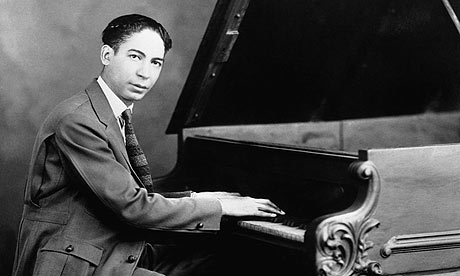
Jelly Roll Morton was a New Orleans pianist, whose real name was Ferdinand Joseph LaMothe. Born in 1884 (or 1889 as some sources state) into a Creole community, he was surrounded by the sounds of gospel, early blues, ragtime and folk songs that made up the rich culture of New Orleans at the time. By the age of 14, influenced by the likes of Scott Joplin, Buddy Bolden and Tony Jackson, he was playing in brothels to earn his keep and became regarded as one of the best pianists in Storyville (the New Orleans red light district). In 1904 he joined a travelling minstrel show and set out across America.

Jelly Roll Morton was the first true Jazz composer. In 1915, he published the sheet music for what is arguably the first Jazz song ever written, "The Original Jelly Roll Blues" - it is a pretty incredible composition, with elements of ragtime, blues with, as Jelly Roll called it, the "Spanish tinge" but not really sounding like any of them; the very essence of Jazz. Although Jazz musicians had existed before this, the publication of "The Original Jelly Roll Blues" marked the first time that Jazz was introduced into any kind of mainstream culture.


Here was something really new - Jelly Roll Morton was an educated musician who was steeped in traditional music and amalgamated all his influences into a truly modern music which go onto become America's greatest musical artform. Everything that happened after, from Dixieland to Swing, to Big Band, to Boogie, to Bebop, to Jump Blues, to Rock 'n Roll, to Free Jazz and so on, could not have happened with out "The Original Jelly Roll Blues". Here's a recording by pianist Jim Hession:


Ironically, for all this, Jelly Roll Morton didn't make any recordings until 1923 and these were a mixture of piano solos and band recordings. The piano recordings are interesting for historical purposes, but this was before the advent of electrical recording, which occured around 1926, and so the recordings are very tinny and not particularly enjoyable. The same goes for the band recordings, which are even worse - he didn't have a real band at the time and they sound bland and uninspired.

Jelly Roll must realised this himself, because in 1926 he put together his Red Hot Peppers, one of the best Jazz bands of the era. Less jammy then earlier Jazz bands like King Olivers and less improvisational than Louis Armstrong's Hot Fives, the Red Hot Peppers were tight-as-a-pussy-cat, virtuoistic, but wild and uninhibited. Featuring the great Kid Ory on trombone and Johnny St. Cyr on banjo among others, there recordings are also some of the best sounding too - he must have shelled out for better recording equipment. One of their best recordings is "Black Bottom Stomp" from 1926 - a wild dance number which features every band member going at it like a muthah, but through which the compositional genius of Jelly Roll Morton (who is on piano) shines through:


They all so recorded a full band arrangement of the "The Original Jelly Roll Blues" which is not only a brilliant recording, but which is a great example of how Jelly Roll Morton was able to transpose his piano playing into an ensemble arrangement:


The Red Hot Peppers made a lot of great recordings until he disbanded them in 1930. Jelly Roll Morton lay low for most of the 1930's - his Hot style of Jazz was being replaced by the smoother sound of the Big Bands and Swing. Although he did record intermittently in the 1930's, his most important recordings were with legendary folklorist Alan Lomax in 1938, for the library of congress. Not released for decades, Alan Lomax made hours and hours of recordings of Jelly Roll discussing Jazz, Ragtime, New Orleans, folk music, classical music and anything else that came to mind.


During these sessions, he got a bit tipsy and recorded a few "dirty" songs, which he had played in brothels in New Orleans back in the 19th century, but which until then he had no hope of recording. They're interesting simply because they prove that this kind of language was not invented in the 70's. Take this recording of "Dirty Dozen" which includes massive amounts of expletives as well as homosexuality, bestiality and whatever other fun things he could think of:


Lovely stuff. Less abrasive perhaps, was his recording of the traditional blues song, "Hesitation Blues":


Around 1939, he put together another band, his New Orleans Jazzmen and recorded a number of more bluesy, more vocals-based songs. They were not commercially successful, but they are very good. He recorded two of his most covered songs during this session, the "Funky Butt" update, "Buddy Bolden's Blues" and "Winin' Boy Blues":


Jelly Roll Morton died in 1941 from complications involving asthma. In later years he gained reputation as a bit of an arrogant bastard - claiming to have invented Jazz in 1902 and slagging of W.C. Handy in a magazine, he gained an image of a man bitter at what he saw as not getting his dues. Well, Jelly Roll Morton may not have invented Jazz outright, but he was probably it most influential proponent and the man who turned it into a genuine artform. He was to Jazz what Scott Joplin was to Ragtime and W.C. Handy was to the Blues. Not to mention that, unlike either of these two, he was also one of its great performers and his Red Hot Pepper recordings are essentially flawless.

Chang goose, muds...