Showing posts with label sex. Show all posts

Wednesday, 3 February 2010

American Artist No. 2: Blind Blake


You know, there's a very typical image of the bluesman in most people's heads. That of the haggered old guy, dressed in dusty dungerees, sitting on a porch swing, banging out some amelodic 3 chord drone and wailing in an off-key voice about the devil, death and his "baby" her various weelings and dealings.

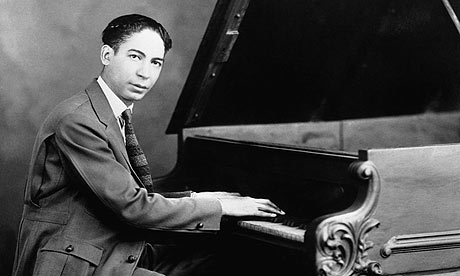
Yeah? Well, Blind Blake is NOTHING like that. Blind Blake represents the other side of the bluesman spectrum - dressed up sharp, singing often-witty lyrics over the maybe the most stunning guitar playing ever put on record. Look, he's fecking smiling in that photo!

Nothing is really known about Blind Blake. The photo above is the only one ever discovered. Some people have suggested he came from the Gullah (or Geechie) communities of South Carolina, since on one of his records he starts using the dialect, but this has never been confirmed. Even his real name was never sure - on another record he actually states his name is "Blind Arthur Blake", but some have suggested his last name was actually "Phelps" and that "Blake" was a nickname denoting a "hard-ass". He was probably born circa 1893 and is thought to have died sometime in the 1930's, although this has never been proven, either. He was, along with Blind Lemon Jefferson, the best-selling blues artist of the 1920's and, unlike Blind Lemon Jefferson, it's not hard to see why - his records are catchy, witty, cool and jaw-droppingly complex.

Blake played blues, but he equally often played ragtime, pop songs, jazz and even a British music hall number (sort of). He is often considered the Father of Ragtime Guitar - he pioneered an incredibly complex method of fingerpicking which is maybe, to this day, the most innovative and complex ever recorded outside of the most advanced flamenco or classical guitarists and while many people (including myself) have attempted to imitate it, none have ever succeeded. At the time, adverts referred to it as his "piano-sound guitar" and that's basically what it is. Take this recording, "Skeedle Loo Doo Blues" from 1926, as a quintessential example of his ragtime style - the name is probably just for marketing purposes, as the song is most certainly ragtime:


That's one guy with one guitar and yet somehow he manages to play bass, rhythm and lead all at the same time. Perhaps the thing that makes Blake so amazing is his bass lines - whereas even other blues fingers just use an alternating bass with their thumbs (bum-bum, bum-bum, one two, one two, you get the idea) Blake seems to actually create a whole seperate melody with his thumb, while engaging in stunning improvisational playing with his forefingers.

His first record release was "West Coast Blues" backed with "Early Morning Blues" in1926. "West Coast Blues" is another ragtime piece, while "Early Morning Blues" is a genuine blues song. It begins the long line of casually misogynistic songs in which he cheerfully extols the joy of shooting your woman:


The record was a hit and things just kept flowing for him. One thing I'd like to point out about Blake was that he was not really a "country blues" artist, but much more of an urban musician compared to the likes of Blind Lemon Jefferson or Blind Willie McTell.. As such, there are no folk songs in his repetoire and he has a much more heavy jazz influence. On his 1928 record, "Southbound Rag", he is joined by jazz clarinetist (and Louis Armstrong regular), Johnny Dodds:


Maybe his biggest hit, and most well known song, is "Diddie Wah Diddie" from 1928. This is his blues-pop masterpiece - it's a blues in structure, but the song itself is so catchy, bouncy, fun and yet intricate and filled with some of his most jaw-dropping instrumental passages that you could hardly imagine the likes of Robert Johnson covering it:


There's so much I could post for Blind Blake but it would be overwhelming - a really good article on him can be found here: http://www.gracyk.com/blake1.shtml

The main thing about Blind Blake - and the main reason he's not so well known today, except by guitarists - is that he never, EVER fits the patronising bluesman stereotype that was formulated during the 1960's. You can't put him up a symbol of how hard black people had it in the 1920's and how they express the suffering of the negro people through song. Blind Blake was not about suffering or misery. He was about the fun times, the jazz times, he was the spirit of the Roaring Twenties. He came, he made a lot of records, he sold a lot of records and then dissappeared leaving a legacy which those people who really appreciate good music and incredible guitar-playing have treasured and which those pretentious twats who only want their bluesmen to be simplistic, god-fearing, miserablist dumb-asses in order to appease their own elitist insecurites have ignored.

Blind Blake was the man. To finish, here's me playing one of his classic ragtime-pop hits, "That'll Never Happen No More":


Shang goose, cruds!

Sunday, 31 January 2010

American Artist No. 1: Jelly Roll Morton


A lot of people have laid claim to the title King of Jazz: Buddy Bolden, its supposed father, Freddie Keppard, his successor, Nick LaRocca, the first man to record it and Paul Whiteman, the first man to introduce to a large white audience. Still, as far I'm concerned, in the 1920's there were only two men who could really lay claim to the title: Louis Armstrong and Jelly Roll Morton.

Jelly Roll Morton was a New Orleans pianist, whose real name was Ferdinand Joseph LaMothe. Born in 1884 (or 1889 as some sources state) into a Creole community, he was surrounded by the sounds of gospel, early blues, ragtime and folk songs that made up the rich culture of New Orleans at the time. By the age of 14, influenced by the likes of Scott Joplin, Buddy Bolden and Tony Jackson, he was playing in brothels to earn his keep and became regarded as one of the best pianists in Storyville (the New Orleans red light district). In 1904 he joined a travelling minstrel show and set out across America.

Jelly Roll Morton was the first true Jazz composer. In 1915, he published the sheet music for what is arguably the first Jazz song ever written, "The Original Jelly Roll Blues" - it is a pretty incredible composition, with elements of ragtime, blues with, as Jelly Roll called it, the "Spanish tinge" but not really sounding like any of them; the very essence of Jazz. Although Jazz musicians had existed before this, the publication of "The Original Jelly Roll Blues" marked the first time that Jazz was introduced into any kind of mainstream culture.


Here was something really new - Jelly Roll Morton was an educated musician who was steeped in traditional music and amalgamated all his influences into a truly modern music which go onto become America's greatest musical artform. Everything that happened after, from Dixieland to Swing, to Big Band, to Boogie, to Bebop, to Jump Blues, to Rock 'n Roll, to Free Jazz and so on, could not have happened with out "The Original Jelly Roll Blues". Here's a recording by pianist Jim Hession:


Ironically, for all this, Jelly Roll Morton didn't make any recordings until 1923 and these were a mixture of piano solos and band recordings. The piano recordings are interesting for historical purposes, but this was before the advent of electrical recording, which occured around 1926, and so the recordings are very tinny and not particularly enjoyable. The same goes for the band recordings, which are even worse - he didn't have a real band at the time and they sound bland and uninspired.

Jelly Roll must realised this himself, because in 1926 he put together his Red Hot Peppers, one of the best Jazz bands of the era. Less jammy then earlier Jazz bands like King Olivers and less improvisational than Louis Armstrong's Hot Fives, the Red Hot Peppers were tight-as-a-pussy-cat, virtuoistic, but wild and uninhibited. Featuring the great Kid Ory on trombone and Johnny St. Cyr on banjo among others, there recordings are also some of the best sounding too - he must have shelled out for better recording equipment. One of their best recordings is "Black Bottom Stomp" from 1926 - a wild dance number which features every band member going at it like a muthah, but through which the compositional genius of Jelly Roll Morton (who is on piano) shines through:


They all so recorded a full band arrangement of the "The Original Jelly Roll Blues" which is not only a brilliant recording, but which is a great example of how Jelly Roll Morton was able to transpose his piano playing into an ensemble arrangement:


The Red Hot Peppers made a lot of great recordings until he disbanded them in 1930. Jelly Roll Morton lay low for most of the 1930's - his Hot style of Jazz was being replaced by the smoother sound of the Big Bands and Swing. Although he did record intermittently in the 1930's, his most important recordings were with legendary folklorist Alan Lomax in 1938, for the library of congress. Not released for decades, Alan Lomax made hours and hours of recordings of Jelly Roll discussing Jazz, Ragtime, New Orleans, folk music, classical music and anything else that came to mind.


During these sessions, he got a bit tipsy and recorded a few "dirty" songs, which he had played in brothels in New Orleans back in the 19th century, but which until then he had no hope of recording. They're interesting simply because they prove that this kind of language was not invented in the 70's. Take this recording of "Dirty Dozen" which includes massive amounts of expletives as well as homosexuality, bestiality and whatever other fun things he could think of:


Lovely stuff. Less abrasive perhaps, was his recording of the traditional blues song, "Hesitation Blues":


Around 1939, he put together another band, his New Orleans Jazzmen and recorded a number of more bluesy, more vocals-based songs. They were not commercially successful, but they are very good. He recorded two of his most covered songs during this session, the "Funky Butt" update, "Buddy Bolden's Blues" and "Winin' Boy Blues":


Jelly Roll Morton died in 1941 from complications involving asthma. In later years he gained reputation as a bit of an arrogant bastard - claiming to have invented Jazz in 1902 and slagging of W.C. Handy in a magazine, he gained an image of a man bitter at what he saw as not getting his dues. Well, Jelly Roll Morton may not have invented Jazz outright, but he was probably it most influential proponent and the man who turned it into a genuine artform. He was to Jazz what Scott Joplin was to Ragtime and W.C. Handy was to the Blues. Not to mention that, unlike either of these two, he was also one of its great performers and his Red Hot Pepper recordings are essentially flawless.

Chang goose, muds...

Friday, 29 January 2010

The Blues Ain't Nothing But...

Now we come to a controversial subject: the blues. There is no genre in American music more degraded, misinterpreted, over-mystified and abused than that of the BLUES. Nowadays, the term "blues" has been used to describe everything from George Gershwin to the White Stripes. And is there any sight more vomit-inducing that seeing a bunch of middle-class art student sitting around in a coffee bar talking about how much they bloody love Robert Johnson and Son House and the sheer "darkness" and "suffering of the negro people" and whatnot...


Look, the main thing to understand about "blues" is that there are really two types of blues. One type of blues refers to folk songs being sung since the 19th century dealing with tragedy, world-weariness and sexual conquest and lots of other fun things - the other type of "blues" refers an actual musical structure involving an 8, 12 or 16 bar system of "blue notes" and flattened sevenths and so on, which was solidified around the beginning of the 20th century by musicians like W.C. Handy and Hart Wand. More often than not these two definitions overlap, of course.


W.C. Handy is most often referred to as the Father of the Blues. Now this is of course a fairly bollocks term - W.C. Handy neither invented the blues, which had been sung among negro communities for years, nor was even the first man to publish a blues song (That was Hart Wand's "Dallas Blues" in 1912). He was, however, the man who did the most create the idea of the blues as a musical form and a respectable art form - he played a role in relation to the blues, that was similar to that played by Robert Burns in relation to Scottish folk music; he was a collecter and adapter of songs. His first published song was the "Memphis Blues" in 1914 - this song is not a blues song throughout; more like half-blues, half-ragtime. Here's a recording by pianist Jim Hession:


The blues first found its popularity in the vaudeville circuits - many of the songs sung in the 1910's with the label "blues" were not actually blues in the musical sense, even if they did often emulate some of the style. Perhaps the first blues hit recording was Marion Harris' 1920 version of W.C. Handy's 1916 "St. Louis Blues". The "St. Louis Blues" is W.C. Handy's masterpiece and one the truly great American songs. It was, for a long time, the most recorded song in the world and if W.C. Handy is remembered for nothing else, it will be this he is remembered for. The song IS a blues, but it opens with a habanera rhythm which repeated halfway through the song. And the lyrics are as iconic as it gets. I could play Marrion Harris' version of the song, but I don't think it really gets the power of the song across, even if it is quite a good version. The best version of the song is probably Louis Armstrong's 1954 recording - 8 minutes long and loud as feck, it is severely awesome:


The first recording of the blues by an African-American vocalist was Mamie Smith's 1920 recording of "Crazy Blues" and it was perhaps the most influential recording in American history - after it became a hit, record companies realised they could make money from "race records" and so the floodgate was opened for every African-American muscian who has recorded up to this day. The song itself is very much vaudeville-styled blues and Mamie Smith was no genius, but still, it's interesting:


After Mamie Smith, came Ma Rainey, who had actually been singing blues since 1902 and was known as the Mother of the Blues and Bessie Smith, by far the most popular female blues singer of the era, known as the Empress of the Blues. Here's her 1927 recording of "After You've Gone":


Another market soon opened up: country blues. Rural blues musicians, usually either pianists or guitarists, started getting recorded by the bucketload. The first country blues recording was "Guitar Blues" by Sylvester Weaver in 1923, but to be honest, it's shit - the B-side, "Guitar Rag" is much better, but its not blues, although it is the first recording of slide guitar on record. I can't seem to find it on YouTube (only the 1927 re-recording), though. He was followed by one Blind Lemon Jefferson in 1925 - the most popular country blues musician of his era. Listening today, it's hard to tell why Blind Lemon Jefferson was so popular. His music is atonal, amelodic, almost rhythm free and dark and depressing. Yet somehow he was the most popular. Another factor is that his records have been preserved terribly - they are worst-sounding quality of any music from the era. As such, his enjoyment is a bit tricky, but here's one of his more listenable recordings from 1927:


Yeah. Perhaps a less challenging, still awesome example of country blues can be found in Blind Willie McTell. Blues was just one of the many genres that Blind Willie McTell was proficient in - he could do ragtime, folk, gospel - but he could plays the blues like a bitch, too. His most famous song is "Statesboro Blues" because it was covered by the Allman Brothers *makes wanking motion with hand*, but here's another classic song - a 16 bar blues called "Searching the Desert for the Blues:


Now, the main problem that arose with country blues musicians - and one that still exists today - is that there was a lot of genre segregation. Basically, if they're black they're labelled as blues, if they're white they're labelled as country. The fact is, the repetoires of both black and white musicians was not radically different at all - blacks played country songs and whites played blues song. It's just that the recording companies found it easier to market artists through these simple labels. Take Mississippi John Hurt - he only recorded one genuine blues song in the 1920's and he's labelled as a "bluesman" when he's really a country singer. Listen to this:


He was also MUCH better recorded and preserved than Blind Lemon, too. I suppose this goes back to my first paragraph about the two kinds of blues - this is the kind of blues that existed before a musical structure was applied to it by various composers. Still, there are some cases where the labelling is simply idiotic - case in point, Jimmie Rogders. Jimmie Rodgers is known as the "Father of Country Music" which is utter bollocks, because, firstly, country music existed long before him and, secondly, 80% of his music is blues. His most famous song is "Blue Yodel No. 1" from 1927 and it's a genuine blues in both style and form:


Don't get wrong, I love Jimmie Rodgers, but the only reason he's labelled as country is because he's white. And the only reason Mississippi John Hurt is labelled blues is because he's black. That's still how it works today.

There's a LOT more to the blues than just what I've said here, but I'll need to go into various sub-categories and regional styles to describe it, which I'll do in future.

Rang juice, floods!

Tuesday, 26 January 2010

The first post is always the hardest...

...I have absolutely nothing to say.

This blog centres around the old, weird America. It brings hot jazz, negro spirituals, civil war music, old-time folk, country, bluegrass, blues, boogie, film noir, screwball comedies, surrealism, gangsters, universal horrors and all things bright and beautiful...

It may just be God's own blog, but you won't here me saying that...

For now, here's Grandpa Jones!